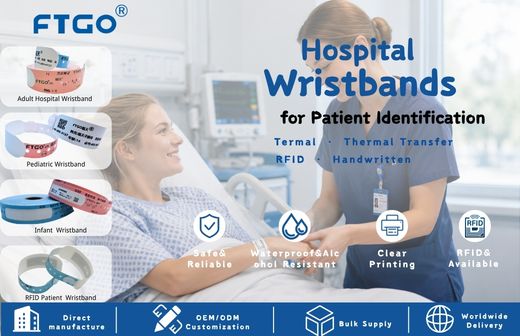
How to calculate hospital wristband purchase quantity
In every hospital, patient identification wristbands play a vital role in ensuring accurate patient care and safety. From admission and surgery to discharge, each patient must wear a wristband containing essential identification details.
However, one of the most common challenges faced by hospital procurement teams is how to estimate the right number of wristbands to purchase — enough to cover daily use, but not so much that it leads to excessive inventory.
This guide explains how to calculate hospital wristband requirements step by step, using realistic formulas and examples, so you can plan your orders with confidence.

1. Several factors affecting the purchase quantity of wristbands
The total number of wristbands a hospital uses depends on several variables:
Number of Hospital Beds
The total bed capacity determines the upper limit of potential inpatients at any given time.Bed Occupancy Rate
The average rate at which beds are occupied. For large hospitals, this usually ranges between 80% and 90%.Average Length of Stay (ALOS)
The average number of days a patient remains hospitalized. Shorter stays mean faster patient turnover — and higher wristband usage.Replacement or Damage Rate
Some wristbands may need to be reprinted due to wear, incorrect information, or patient transfers. A 5–10% replacement rate is commonly used in planning.Day Surgery and Outpatient Use
If your hospital also uses wristbands for day surgery or emergency visits, include these patient groups in your calculations.
2. Wristband Usage Formula
You can estimate daily and long-term wristband needs using the following formula:

✅ This model assumes one wristband per admission. Adjust accordingly if your hospital requires wristband renewal during long stays.
3. Practical Example
Here’s a reference table based on an 85% occupancy rate and a 5–10% replacement rate:
| Hospital Beds | Average Stay (Days) | Daily Wristband Use | Half-Year Demand |
|---|---|---|---|
| 1,000 | 7 | 128–134 | 23,000–24,000 |
| 1,500 | 7 | 191–201 | 35,000–36,000 |
| 2,000 | 7 | 255–268 | 46,000–49,000 |
| 1,000 | 10 | 93–102 | 17,000–18,000 |
💡 Tip: If your facility also uses wristbands for outpatients or day surgery patients, add another 10–20% to the total.
4. Procurement and Inventory Recommendations

Procure on a Half-Year Basis
Ordering wristbands every 3–6 months balances cost efficiency and storage space.Maintain a 10–20% Safety Stock
To handle seasonal admission peaks, emergencies, or unexpected ward expansions.Order by Department or Application Type
Hospitals typically require multiple wristband types, such as:Adult thermal printing wristbands
Neonatal identification wristbands
RFID wristbands for surgical or high-security areas
Track Historical Usage
Use printer logs or wristband management software to record actual consumption for more accurate future forecasts.
5. Summary
Accurate wristband procurement planning helps hospitals maintain smooth operations, minimize waste, and ensure uninterrupted patient identification.
By applying data-driven calculations and regular consumption reviews, you can achieve cost-effective and reliable wristband management.
FTGO provides customizable wristband solutions for hospitals of all sizes — from thermal and thermal transfer wristbands to RFID and patient-specific identification bands — supporting hospitals in achieving efficient, standardized supply management.
Share this article


Follow us
A quick overview of the topics covered in this article.