How to Choose the Right Hospital Wristbands for Patient Identification
Patient identification is a critical part of safe and efficient healthcare management. From admission and inpatient care to emergency treatment, maternity services, and discharge, hospitals need a reliable way to identify patients accurately throughout their stay.
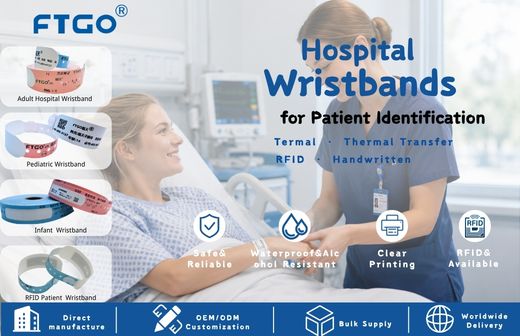
Hospital wristbands, also known as patient identification wristbands or patient ID bands, provide a simple and effective way to display essential patient information directly on the patient. Depending on the hospital’s workflow, wristbands can be handwritten, thermally printed, or equipped with RFID technology.
For hospitals, healthcare organizations, medical distributors, and procurement teams, choosing the right hospital wristbands requires more than comparing unit prices. Material quality, printing method, patient age, durability, comfort, printer compatibility, customization, and supply capability should all be considered.
This guide explains the key factors to consider when selecting hospital wristbands for patient identification and how to choose a suitable solution for different healthcare environments.
Why Are Hospital Wristbands Important for Patient Identification?
Hospital wristbands are used to display essential information that helps healthcare professionals identify patients accurately.
Depending on the hospital’s identification system, a patient wristband may contain:
- Date of birth
- Medical record number (MRN)
- Patient identification number
- Barcode or QR code
- Allergy alerts
- Ward or department information
- Admission information
- Other hospital-defined identification data
The information printed or written on a wristband should remain readable throughout the patient’s stay. Clear identification can support healthcare workflows and help reduce the risk of patient identification errors.
For hospitals implementing digital patient management systems, printable wristbands can also integrate with barcode-based identification workflows. RFID patient wristbands can provide additional options for contactless identification and smart healthcare applications.
FTGO’s patient identification bands support thermal printing, handwritten identification, and RFID-enabled solutions for different healthcare environments.
What Should You Consider When Choosing Hospital Wristbands?
There is no single hospital wristband suitable for every patient or healthcare application. Procurement teams should evaluate several factors before placing a bulk order.
1. Patient Identification Requirements
The first step is to determine what information needs to be displayed and how the hospital staff will verify patient identity.
For basic identification, a wristband may include the patient’s name, date of birth, and medical record number.
For hospitals using barcode-based workflows, a printable wristband can include a barcode or QR code linked to the patient’s electronic medical record.
For more advanced healthcare environments, RFID patient wristbands can support contactless identification and integration with suitable hospital systems.
The wristband should therefore be selected according to the hospital’s existing patient identification workflow rather than as an independent consumable.
2. Choose the Right Wristband Material
Material directly affects patient comfort, durability, printing performance, and suitability for different healthcare applications.
Common materials used for hospital wristbands include:
Nano-Silicone
Soft nano-silicone materials can be suitable for patients who need to wear identification bands for extended periods. A soft surface can help improve wearing comfort while providing durability for daily hospital use.
PVC or Synthetic Materials
These materials can be used for specific medical identification applications where flexibility, durability, and cost efficiency are important.
Printable Medical Materials
For thermal and thermal transfer wristbands, the surface needs to be designed for reliable printing. The material should provide good print clarity and maintain readable patient information during normal use.
When selecting a hospital wristband supplier, procurement teams should ask for material specifications, applicable test reports, and product samples before committing to large-volume orders.
FTGO offers hospital wristbands using different material and product configurations, including nano-silicone-based solutions designed for softness, comfort, and durability.
3. Select the Right Printing Method
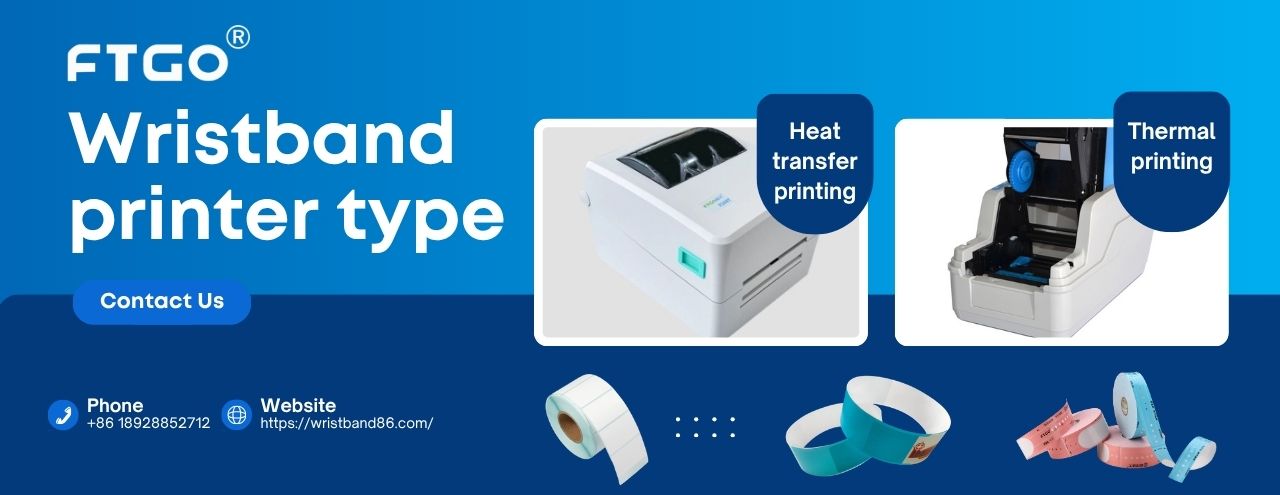
The printing method is one of the most important factors when choosing printable hospital wristbands.
Direct Thermal Wristbands
Direct thermal wristbands can be printed without a ribbon. They are commonly used when hospitals require fast and convenient printing for patient identification.
They can be suitable for:
- Patient admission
- Outpatient services
- Emergency departments
- Short-term patient stays
- Barcode identification
The main advantage is a relatively simple printing workflow because no thermal transfer ribbon is required.
Thermal Transfer Wristbands
Thermal transfer printing uses a ribbon to transfer ink onto the wristband surface.
This printing method can provide durable, high-resolution text and barcode printing, making it suitable for applications where identification information needs to remain readable for longer periods.
When selecting thermal transfer wristbands, hospitals should verify printer and ribbon compatibility before procurement.
FTGO provides both thermal and thermal transfer hospital wristbands, allowing healthcare customers to select a printing solution according to their workflow and durability requirements.
Handwritten Wristbands
Handwritten patient ID wristbands can still be useful in specific healthcare environments where manual identification is preferred.
They may be suitable for:
- Short-stay patients
- Outpatient care
- Emergency situations
- Day surgery
- Healthcare facilities with limited printing infrastructure
For example, FTGO’s handwritten wristbands are designed for short-term clinical applications and provide a write-on surface for manual patient information.
4. Consider Adult, Pediatric, and Newborn Patients
Patient age and wrist size should also influence your hospital wristband selection.
Adult Hospital Wristbands
Adult hospital wristbands are designed for general inpatient and outpatient applications. They typically require a balance between:
- Secure fastening
- Readable printing
- Patient comfort
- Durability
- Easy application
Pediatric Wristbands
Children generally require smaller wristbands with an appropriate size and secure closure.The wristband should remain comfortable without being too loose or too tight.
Infant and Newborn Wristbands
Newborn identification requires particular attention to size, softness, security, and patient comfort.Hospitals may use infant wristbands independently or combine them with mother-infant identification systems.For maternity departments, mother-infant wristbands can help establish a matching identification workflow between mother and newborn.FTGO provides adult, infant, and mother-infant hospital wristband solutions as part of its hospital identification product range.
5. Check Waterproof and Alcohol Resistance
Hospital wristbands may come into contact with water, cleaning products, alcohol-based disinfectants, and other substances during routine patient care.
If the printed information becomes blurred or unreadable, the effectiveness of the identification system can be compromised.
Therefore, procurement teams should evaluate:
- Water resistance
- Alcohol resistance
- Abrasion resistance
- Print durability
- Adhesion or closure performance
For hospitals with long patient stays, durable printing and material performance become especially important.
FTGO’s medical wristband solutions are designed with water and alcohol resistance in mind, with product configurations intended to maintain readable identification information during normal healthcare use.
6. Patient Comfort Matters
Hospital wristbands may be worn for hours or even several days. A wristband that is too hard, rough, or poorly fitted can cause discomfort and negatively affect the patient experience.
When evaluating hospital wristbands, consider:
- Softness
- Flexibility
- Edge smoothness
- Wristband width
- Closure design
- Adjustability
- Skin compatibility
- Long-term wearing comfort
This is particularly important for newborns, elderly patients, long-term inpatients, and patients with sensitive skin.
FTGO positions its nano-silicone hospital wristbands around softness, comfort, and skin-friendly use, including applications for newborns and long-term patients.
7. Do You Need RFID Patient Wristbands?
Traditional printed hospital wristbands may be sufficient for many healthcare environments. However, hospitals implementing smart healthcare systems may have additional identification requirements.
RFID patient wristbands can provide contactless identification when integrated with compatible RFID readers and hospital systems.
- Potential applications include:
- Patient identification
- Patient tracking
- Medication verification workflows
- Hospital asset and workflow management
- Maternity identification
- Smart hospital applications
Before choosing RFID wristbands, procurement teams should define the required RFID technology, reader compatibility, operating environment, data requirements, and integration capabilities.
RFID should therefore be considered as part of a complete hospital identification system rather than simply as an upgraded wristband material.
FTGO offers RFID patient wristbands alongside traditional thermal and handwritten identification solutions, allowing customers to select different identification technologies according to their requirements.
8. Check Printer Compatibility Before Ordering
If your hospital uses printable wristbands, printer compatibility should be confirmed before purchasing.
A mismatch between the printer and wristband can result in:
- Poor print quality
- Incorrect positioning
- Barcode readability problems
- Printing failures
- Material feeding issues
- Increased operating costs
Before placing a bulk order, provide your supplier with your printer model and ask for compatibility confirmation.
You should also evaluate:
- Printing method
- Print width
- Wristband dimensions
- Ribbon requirements
- Barcode resolution
- Software compatibility
- Printing speed
A reliable supplier should be able to provide technical information and help customers select an appropriate wristband for their existing printing equipment.
9. Customization for Hospital Procurement
Different hospitals may have different patient identification requirements.
Customization may include:
- Wristband size
- Color
- Closure
- Printing layout
- Hospital logo
- Local language
- Barcode
- QR code
- Allergy indicators
- Patient information fields
- RFID chip configuration
For medical distributors and healthcare brands, OEM and ODM capabilities can also be important when developing private-label products or responding to hospital tenders.
FTGO supports customization of wristband sizes, colors, printing formats, and other product specifications for healthcare procurement and bulk orders.
10. Evaluate the Manufacturer, Not Just the Wristband
For large hospital orders, choosing the right supplier can be just as important as selecting the product.
A reliable hospital wristband manufacturer should be able to provide:
- Stable production capacity
- Consistent product quality
- Multiple wristband types
- Customization capabilities
- Printer compatibility support
- Quality control
- Batch traceability
- Technical support
- Reliable international shipping
- Long-term supply capability
This is especially important for medical distributors and companies participating in hospital tenders.
FTGO has more than 15 years of wristband manufacturing experience and operates three factories with five production lines and more than 5,000㎡ of factory space. The company provides hospital wristbands, RFID solutions, event wristbands, printers, labels, and other related products.
Hospital Wristband Selection Checklist
Before purchasing hospital wristbands in bulk, procurement teams can use the following checklist:
- Patient group: adult, pediatric, or newborn
- Identification method: handwritten, thermal, thermal transfer, or RFID
- Required patient information
- Barcode or QR code requirements
- Material and skin comfort
- Waterproof performance
- Alcohol resistance
- Print durability
- Closure method
- Wristband dimensions
- Printer compatibility
- Customization requirements
- Packaging requirements
- Quality documentation
- Production capacity
- MOQ and lead time
- Technical support
- Long-term supply capability
Evaluating these factors together can help hospitals and medical distributors select a more appropriate patient identification solution.
Why Choose FTGO for Hospital Wristbands?
FTGO is a professional wristband manufacturer providing patient identification solutions for hospitals, clinics, medical distributors, and healthcare procurement projects.
The product range covers:
- Adult hospital wristbands
- Infant wristbands
- Mother-infant wristbands
- Thermal wristbands
- Thermal transfer wristbands
- Handwritten wristbands
- Self-adhesive wristbands
- RFID patient wristbands
This allows customers to source different patient identification products from one manufacturer instead of managing multiple suppliers.
FTGO also supports customized wristband specifications, printing layouts, colors, sizes, and other requirements for bulk healthcare procurement.
For distributors and organizations working on hospital tenders, a manufacturer with multiple product options and scalable production can simplify sourcing and improve supply consistency.

Frequently Asked Questions About Hospital Wristbands
What are hospital wristbands used for?
Hospital wristbands are used to identify patients and display essential information such as name, date of birth, medical record number, barcode, QR code, or allergy information. They support patient identification throughout different stages of healthcare.
What information should be included on a patient identification wristband?
Common information includes the patient’s name, date of birth, medical record number, patient ID, barcode or QR code, and other information required by the hospital’s identification protocol.
What is the best material for hospital wristbands?
There is no single material that is best for every application. The appropriate material depends on patient age, wearing duration, printing method, comfort requirements, durability, and hospital workflow.
Are hospital wristbands waterproof?
Many medical wristbands are designed to resist water. However, actual performance depends on the material, printing technology, and product construction. Hospitals should request product specifications and testing information from their supplier.
What is the difference between thermal and handwritten hospital wristbands?
Thermal wristbands are printed using a thermal printer and are suitable for automated patient identification workflows. Handwritten wristbands are manually written and can be useful for short-term or low-volume applications.
Are RFID wristbands suitable for hospitals?
RFID patient wristbands can be suitable for hospitals that use compatible RFID infrastructure and require contactless identification or smart healthcare applications. The RFID technology should be selected according to the hospital’s readers and system requirements.
Can hospital wristbands be customized?
Yes. Depending on the manufacturer, hospital wristbands can be customized in terms of size, color, closure, printing layout, hospital logo, patient information fields, barcode, QR code, and RFID configuration.
Conclusion
Choosing the right hospital wristbands requires more than selecting the lowest-cost product. Hospitals and medical distributors should consider patient identification requirements, material, printing method, patient age, durability, comfort, RFID needs, printer compatibility, customization, and supplier capabilities.
For standard patient identification, thermal or handwritten wristbands may be sufficient. Hospitals using automated barcode workflows may benefit from printable thermal or thermal transfer wristbands, while healthcare organizations implementing smart identification systems can consider RFID patient wristbands.
For bulk procurement, partnering with an experienced hospital wristband manufacturer can provide additional benefits through product variety, customization, production capacity, and long-term supply support.
If you are looking for hospital wristbands for hospitals, clinics, medical distribution, or healthcare tenders, FTGO can provide customized patient identification solutions based on your application and procurement requirements.
Contact FTGO to discuss your hospital wristband requirements and request product specifications, customization options, or a bulk quotation.
Share this article
Follow us
A quick overview of the topics covered in this article.