Thermal transfer wristbands: the best choice for newborns
Introduction: When Durability and Gentleness Matter Most
Accurate patient identification is the foundation of safe and efficient healthcare. While direct thermal wristbands are ideal for short-term and fast-paced environments, certain clinical scenarios demand greater print permanence, higher clarity, and superior material softness.
This is especially true in neonatal units, maternity wards, and pediatric departments—where wristbands are worn for longer periods and skin sensitivity is a critical concern.
For these applications, thermal transfer wristbands have become the preferred solution.
With over 14 years of manufacturing experience in hospital identification products, we continuously refine our materials, structures, and printing compatibility. Among all our thermal transfer products, the G610N Thermal Transfer Adhesive Wristband has consistently proven to be one of the most trusted choices for newborn identification.
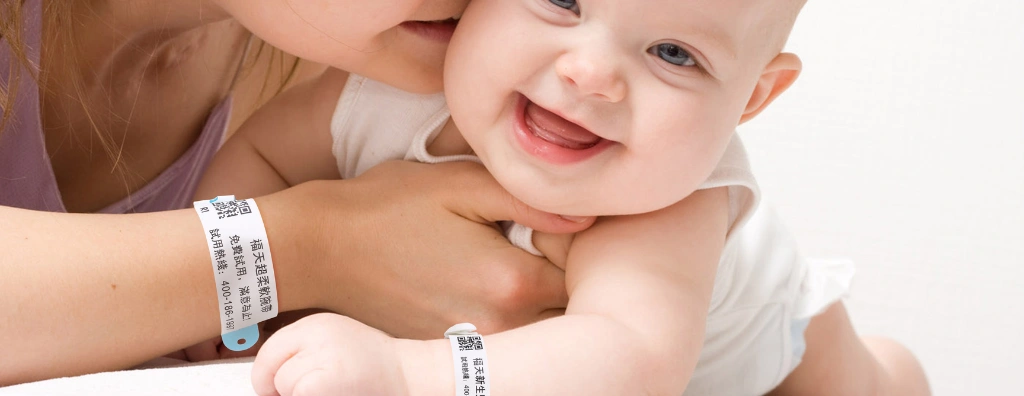
What Is a Thermal Transfer Wristband?
A thermal transfer wristband is printed using a thermal transfer printer in combination with a ribbon (carbon ribbon). During printing, heat transfers ink from the ribbon onto the wristband surface, creating highly stable text, barcodes, and symbols.
Key Characteristics of Thermal Transfer Printing:
Requires a thermal transfer wristband printer
Uses ribbon-based printing
Produces long-lasting, fade-resistant text
Maintains clarity under moisture, friction, and extended wear
Because of these characteristics, thermal transfer wristbands are widely used in:
Neonatal and maternity units
Pediatric wards
Long-stay patient identification
Situations requiring archival-level print durability
Why Thermal Transfer Wristbands Last Longer Than Direct Thermal
One of the most important differences between direct thermal and thermal transfer wristbands lies in print permanence.
Print Stability Comparison:
Direct Thermal Wristbands
Print reacts chemically to heat
Suitable for short-term use
May fade over time under light or friction
Thermal Transfer Wristbands
Ink is physically transferred and bonded
Resistant to fading, smudging, and abrasion
Ideal for extended wear and newborn identification
For hospitals that prioritize long-term readability and zero risk of information loss, thermal transfer technology provides an added layer of reassurance.
Ultra-Soft Material Design: Made for Newborn Skin
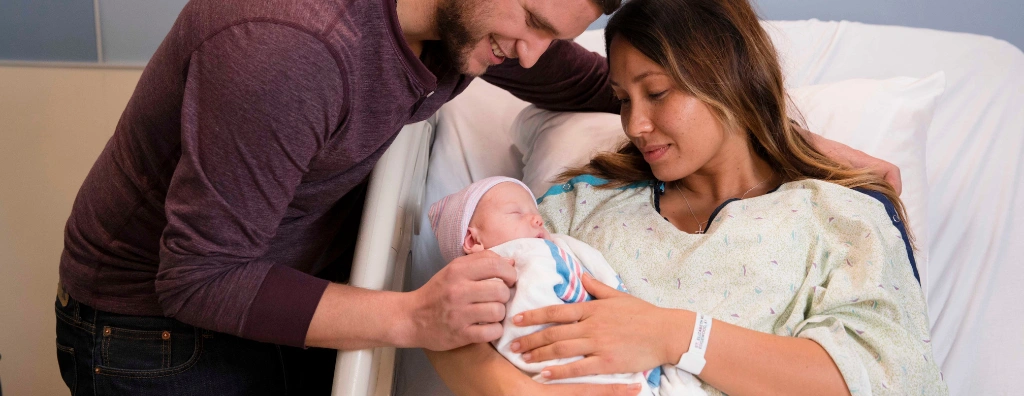
For newborn patients, comfort is not optional—it is essential.
Our G610N thermal transfer wristband is engineered with this exact requirement in mind.
Material Advantages of G610N:
Extra-soft, skin-friendly base material
Gentle flexibility that adapts to infant movement
Reduced pressure on delicate newborn skin
Suitable for continuous wear during hospital stay
Unlike standard wristband materials that may feel rigid or abrasive, G610N focuses on softness without sacrificing strength, making it especially suitable for neonatal use.
Adhesive Closure: Secure, Gentle, and Easy to Apply
The adhesive-style closure of the G610N offers a balanced combination of safety and convenience.
Why Adhesive Closure Works Best for Newborns:
No hard edges or snap components
Even pressure distribution around the wrist
Quick application by medical staff
Designed to prevent accidental removal
This design helps reduce unnecessary handling while ensuring the wristband remains securely in place throughout the infant’s stay.
Printer and Ribbon Compatibility
Thermal transfer wristbands require the correct printing setup to achieve optimal results.
The G610N wristband is compatible with:
Thermal transfer wristband printers
Standard medical-grade carbon ribbons
High-resolution barcode and text printing
When paired with a properly configured thermal transfer printer, the G610N delivers:
Sharper text edges
Clear barcodes for scanning
Consistent print quality across batches
Why G610N Is One of the Most Popular Newborn Wristbands
Over the years, hospitals and distributors have consistently chosen G610N for neonatal identification due to its balanced performance across all critical factors:
Long-lasting, fade-resistant printing
Exceptional material softness
Newborn-friendly adhesive closure
Stable compatibility with thermal transfer printers
It is this combination—not a single feature—that has made G610N one of the most widely adopted newborn wristbands in real clinical environments.
Conclusion: Choosing the Right Wristband for Newborn Care
Selecting the appropriate wristband technology is not only a technical decision—it directly impacts patient comfort, identification accuracy, and workflow reliability.
For newborn and pediatric applications where print durability, softness, and security are essential, thermal transfer wristbands remain the optimal solution.
With over 14 years of focused manufacturing experience, refined materials, and proven products like the G610N Thermal Transfer Adhesive Wristband, we continue to support hospitals and partners worldwide with reliable patient identification solutions.
Share this article

Follow us
A quick overview of the topics covered in this article.
- Introduction: When Durability and Gentleness Matter Most
- What Is a Thermal Transfer Wristband?
- Why Thermal Transfer Wristbands Last Longer Than Direct Thermal
- Ultra-Soft Material Design: Made for Newborn Skin
- Adhesive Closure: Secure, Gentle, and Easy to Apply
- Printer and Ribbon Compatibility
- Why G610N Is One of the Most Popular Newborn Wristbands
- Conclusion: Choosing the Right Wristband for Newborn Care